
School Window Cleaning Melbourne
Interior and exterior window cleaning for Melbourne schools — single-storey classrooms, multi-storey buildings, skylights, louvres and glass panels. Purified water-fed pole systems allow safe high-level cleaning from the ground without ladders. Term-time and holiday scheduling. Named crew, WWC-checked, WorkSafe Victoria compliant, no subcontractors.
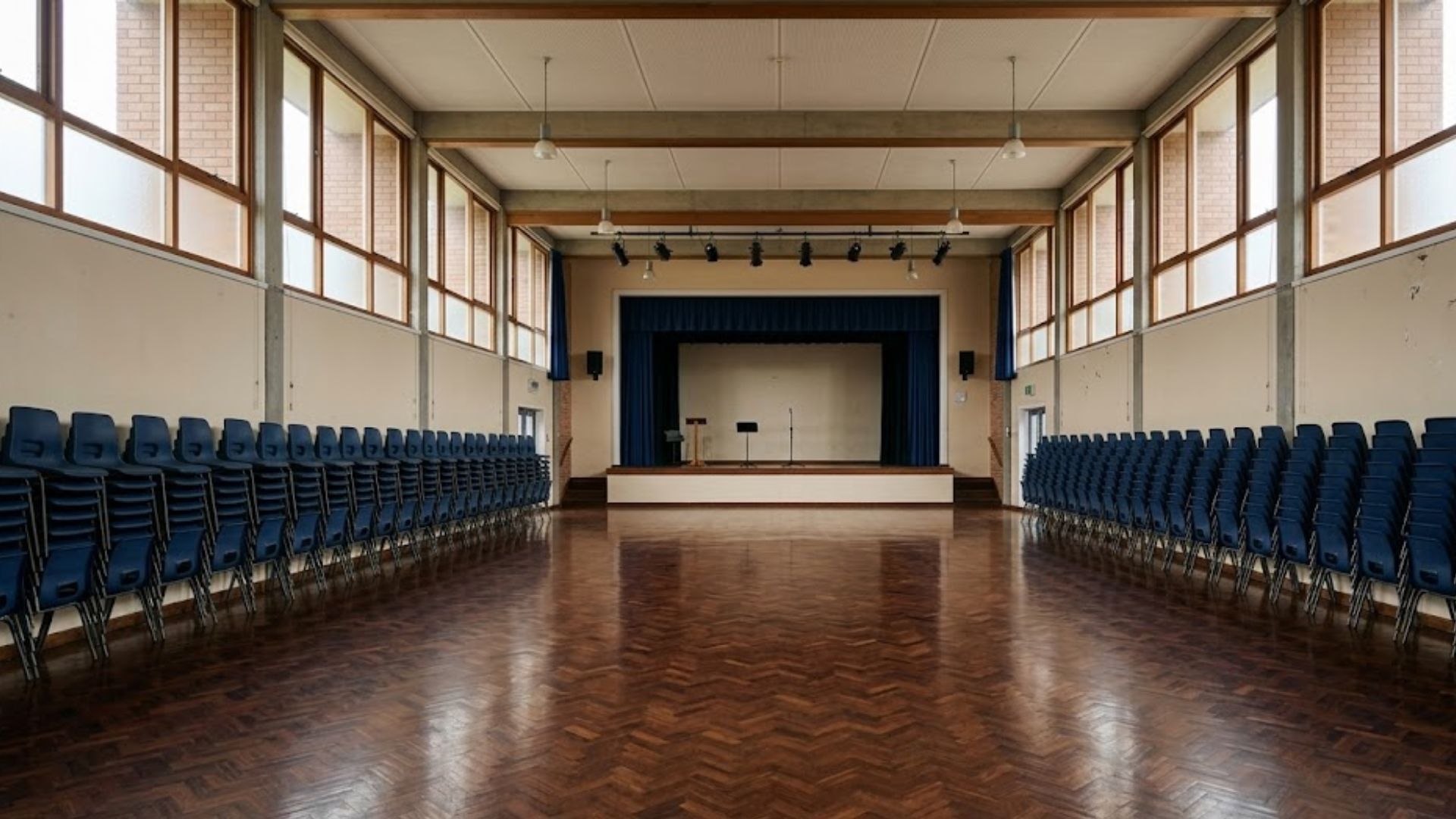
Why Schools Need Regular Window Cleaning
Natural light is one of the most consistently supported factors in classroom learning environments. Research conducted across primary and secondary school settings has repeatedly found correlations between daylight exposure and measurable improvements in student alertness, mood and test performance. Dirty glass — even glass that appears only mildly soiled from the inside — can reduce light transmission significantly. A combination of airborne dust, cobwebs, insect residue, calcium mineral deposits from irrigation overspray and external grime builds up on school glazing throughout each term, progressively reducing the amount of natural light reaching learning spaces.
Beyond light transmission, the external appearance of school windows is a visible indicator of facility maintenance standards. Streaked or visibly dirty glazing sends a different signal to parents and visiting families than freshly cleaned glass. Window cleaning is a high-visibility component with a disproportionate effect on overall campus presentation relative to its cost.
Maximum natural light
Clean glass transmits significantly more natural light into classrooms than glazing carrying a season's worth of grime and mineral deposit buildup. Regular cleaning keeps light levels at their designed maximum without the need to increase artificial lighting to compensate for dirty glazing.
Facility presentation
Window cleanliness is one of the first things noticed at a distance when approaching a school building. Clean glazing gives the campus a well-maintained appearance that reflects positively on the school's management of facilities — a detail that registers with parents and prospective families during school tours.
Glass protection
Hard water mineral deposits and environmental contaminants left on glazing surfaces for extended periods begin to etch the glass chemically, causing micro-pitting that permanently reduces clarity even after the surface deposit is removed. Regular cleaning prevents this cumulative damage and extends the service life of the school's glazing.
Interior & Exterior Window Cleaning
Interior and exterior glass present different cleaning challenges and require different methods. Exterior glass accumulates environmental grime, mineral deposits, cobwebs and, in school settings, bird droppings and sports ball impact marks. Interior glass carries fingerprints, adhesive residue, marker splash and condensation staining. Both sides are addressed in a full school window clean, with methods matched to each surface condition.
Exterior Window Cleaning
Purified water-fed pole systems deliver deionised water under pressure to the glass surface and scrub it clean with a soft brush head. Because the water is purified — containing no dissolved minerals — it evaporates without leaving spots or streaks, producing a cleaner result than squeegee methods on many glazing types. The pole extends to 10 metres and beyond, enabling safe exterior cleaning of multi-storey school buildings from the ground without ladders in the majority of configurations. Where elevated access is required, it is carried out under a documented WorkSafe Victoria working-at-heights control plan.
- Ground-level operation — no ladder risk
- Spot-free deionised water rinse
- Multi-storey reach up to 10m+
- Skylights and roof glass included
- Mineral deposit treatment available
Interior Window Cleaning
Interior classroom and corridor windows are cleaned using professional squeegee and microfibre techniques that remove fingerprints, adhesive residue, marker and condensation staining without chemical damage to frames or seals. Louvres are cleaned blade by blade to remove dust and biological buildup from horizontal surfaces that squeegee passes cannot reach. Interior cleaning is carried out after hours or coordinated with the timetable during term time to avoid occupied classrooms.
- Fingerprint & adhesive removal
- Louvre blades cleaned individually
- Reception and library glass
- Frame and sill wipe-down included
- After-hours or timetable-coordinated

Scheduling flexibility: Window cleaning is coordinated around the school calendar. Exterior cleans can run during term time at the building perimeter; interior cleans are scheduled during holidays or after hours to avoid classroom access issues.
Our Window Cleaning Process
The sequence below reflects the standard approach for a typical Melbourne school campus combining single-storey classroom blocks and a multi-storey administration or library building. The specific method at each step may vary by building height and glass type.
Site walk and glass audit
Before work begins, the team walks the building perimeter and identifies each glazed area — window type, height, access conditions, mineral deposit, louvres and skylights. This determines the method and equipment required for each zone and flags areas needing elevated access planning before the clean begins.
Pre-treatment of heavy soiling
Where mineral deposit, paint splash, adhesive residue or heavy biological contamination is present, pre-treatment is applied before the main cleaning pass. Calcium deposits near irrigation systems require a glass-safe mineral remover; adhesive residue requires solvent treatment. Addressing these before the water-fed pole or squeegee pass prevents smearing across the glass surface.
Exterior clean — water-fed pole or squeegee
Exterior glass is cleaned using the water-fed pole system as the primary method where reach allows. The brush head scrubs the glass and frames; the purified water rinse follows, removing loosened grime and leaving no mineral residue as it evaporates. High-level panes and roof glass inaccessible from ground level are addressed at this stage under the approved height safety plan.
Interior clean — squeegee and microfibre
Interior glass is cleaned using professional squeegee technique on large pane areas and microfibre finishing cloths for edges and corners. Louvre blades are wiped individually. Window frames, sills and rubber seals are wiped down as part of each window clean.
Final inspection and reporting
Each completed zone is checked before the team moves to the next building section. Glass identified as having permanent etching, cracking or failed seals is noted and reported to the facilities manager. A completion sign-off is provided at the end of each visit.
Safety at Height for Schools
Working at height is the most significant safety consideration in school window cleaning. Melbourne schools frequently include buildings of two or more storeys, and the safety of students, staff and the cleaning crew is non-negotiable. Golden Star's approach starts with eliminating the need for elevated access wherever possible using water-fed pole systems, and managing it formally with documented controls when it cannot be avoided.
Water-fed pole — ground-level operation
The primary tool for exterior window cleaning is the water-fed pole system, which reaches heights of 10 metres and above from a ground-level operator position. This eliminates the need for ladders, scaffolding or elevated work platforms in the majority of school building configurations, removing the most common elevated-work risk at the source rather than managing it with controls.
WorkSafe Victoria compliance
Where elevated access is still required — certain skylight configurations, parapet-level glass or building geometry that prevents water-fed pole access — the work is carried out under a documented risk assessment and height safety control plan that meets WorkSafe Victoria working-at-heights requirements. No elevated work commences without a site-specific control plan approved before the job begins.
School ground exclusion zones
Any window cleaning work that involves overhead risk — including water-fed pole operation near pedestrian pathways — is scheduled outside school hours or with a defined exclusion zone established and maintained below the work area. No cleaning crew member operates above a zone that includes uncontrolled foot traffic from students or staff.
School Window Cleaning Cost
Window cleaning cost depends on the number of windows, building height, the proportion requiring interior cleaning, access complexity and whether any glass has mineral deposit or adhesive pre-treatment requirements. The indicative ranges below give a starting point for budgeting — a written itemised quote is produced after the free site visit and glass audit.
| Service | Scope | Indicative range |
|---|---|---|
| Exterior window clean — single storey | Per visit, ground-level access | $200 – $450 |
| Exterior window clean — multi-storey | Per visit, water-fed pole | $400 – $900+ |
| Interior window clean | Per visit, full campus | $150 – $350 |
| Full clean — interior & exterior | Single-storey primary school | $300 – $600 |
| Mineral deposit pre-treatment | Per affected zone | From $80 |
| Louvre blade cleaning | Per louvre bank | $20 – $50 |
All prices exclude GST and are indicative only. Written quote provided after free site visit.
What affects the cost?
Free site visit · Written quote within 24 hours · No lock-in first term
Frequently Asked Questions
For most Melbourne schools, exterior windows should be cleaned a minimum of twice per year — typically aligned with the summer and winter school holiday breaks when building access is straightforward. Interior windows and glass panels in high-use corridors and reception areas benefit from quarterly cleaning. The minimum standard for classroom light quality and building presentation is twice-yearly exterior plus quarterly interior cleaning. Schools with irrigation systems near the building perimeter often require more frequent treatment due to hard water mineral deposit buildup on glazing adjacent to sprinkler heads.
Yes, when carried out by a properly equipped and trained crew. Golden Star uses purified water-fed pole systems that reach multi-storey height without ladders, removing the most common working-at-heights risk. Where elevated access remains unavoidable — certain skylight configurations, for example — all elevated work is conducted under a documented risk assessment that meets WorkSafe Victoria working-at-heights requirements. No elevated work is undertaken on school grounds without prior sign-off from the principal or facilities manager, and student exclusion zones are established before any overhead work begins.
Yes. Exterior window cleaning using water-fed pole systems can run during term time from the building perimeter without entering classrooms or disrupting lessons. Interior window cleaning during term time requires temporary classroom access and is coordinated with the school timetable. For most schools the preferred split is exterior cleaning on a regular term-time cycle and interior cleaning during Victorian school holidays when full access is available without timetable constraints. Both approaches are accommodated — the scheduling is confirmed with the business manager at the start of each engagement.
A full exterior clean for a single-storey Melbourne primary school typically starts from $200 to $450 depending on the number of windows and access conditions. Combined interior and exterior cleaning for a standard primary school campus starts from $300 to $600. Larger multi-storey campuses are priced individually after a site assessment and glass audit. Mineral deposit pre-treatment for irrigation-affected glass starts from $80 per zone. A written itemised quote covering every glazed area is provided after the free site visit. For a full cost breakdown, see the pricing page.
Related services
Speak to the team
Call 0484 042 336 Mon–Fri 7am–6pm. Free site visit with every quote.
Get a Free Quote