
Primary School Cleaning Melbourne
Specialist cleaning for Melbourne primary schools — designed for environments used daily by children aged 5 to 12. GECA-certified child-safe products with no hazardous VOC residue on floor and desk surfaces where young students have direct skin contact. Classrooms, art rooms, music rooms, libraries, canteens, bathrooms and outdoor play areas. WWC-checked crew, no subcontractors, Department of Education Victoria compliance.
Why Primary Schools Need Specialist Cleaning
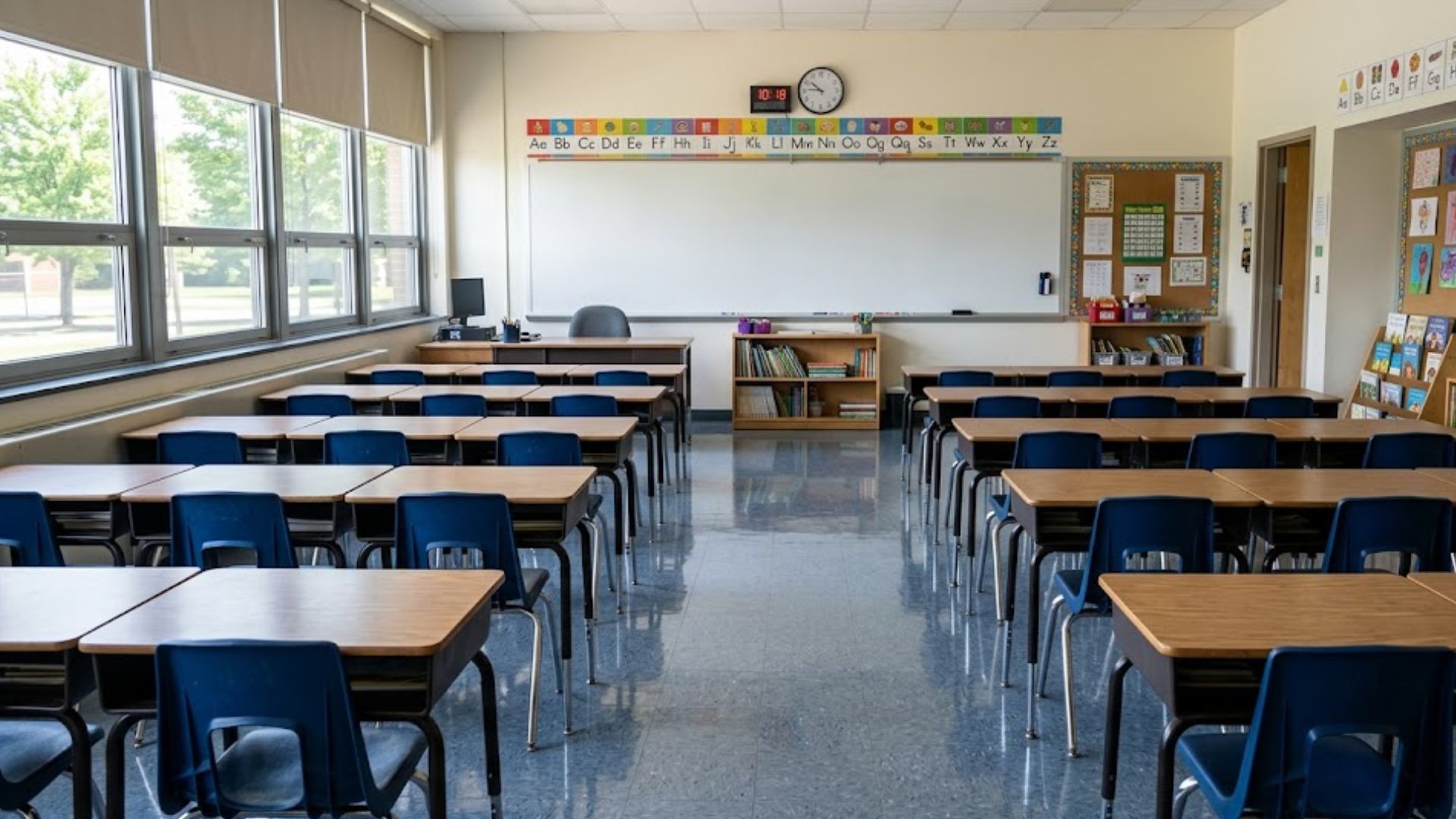
A primary school is not an office or a retail space with adult users who wash their hands before eating and keep their hands away from their faces. It is a facility used continuously by children between the ages of 5 and 12, whose developmental behaviour patterns — frequent floor contact during reading and play activities, hand-to-mouth contact, shared equipment without consistent hand hygiene — create a contamination environment that differs fundamentally from any adult commercial setting. The products, protocols and compliance requirements appropriate for an office cleaning contract are not appropriate for the same building when it is a primary school.
Three factors drive the specialist requirement. Product safety — the GECA-certified, low-VOC, low-residue formulations required for rooms where children sit on the floor and press their hands against cleaned surfaces. Specialist room knowledge — art rooms contaminated with acrylic paint and clay require different treatment to classrooms; sandpit surrounds need different biological management to corridors. And regulatory compliance — Working With Children Checks for all staff, Department of Education Victoria contractor requirements and the child safety policies that primary schools are required to implement under the Child Wellbeing and Safety Act 2005 (Vic).
Floor-contact behaviour
Primary-aged students spend a significant proportion of their school day on or close to the floor — mat sessions, reading groups, activity rotations, play-based learning in Foundation and Year 1. Chemical residue from floor cleaners and disinfectants is transferred to skin and clothing during this floor contact. GECA-certified low-residue floor cleaners are selected specifically to minimise this residue on surfaces children contact directly.
Specialist rooms — art, music, sand
Primary schools contain rooms with no commercial equivalent. Art rooms accumulate acrylic paint on sinks, benches and tiles, clay residue in drains and glue on tables — each requiring a different cleaning approach. Music rooms have instrument-contact surfaces and case storage areas. Sandpit surrounds require periodic biological management to control the contamination introduced by outdoor shoe contact. A generic commercial cleaner has no training or protocol for these spaces.
Regulatory compliance
Working With Children Check requirements under the Child Wellbeing and Safety Act 2005 (Vic) apply to all contractors regularly accessing a primary school, including evening cleaning staff who are not on site during school hours. Department of Education Victoria contractor management requirements specify induction, sign-in procedures and compliance documentation. All Golden Star primary school staff meet these requirements as a baseline, not an add-on.
Areas We Clean in Primary Schools
A Melbourne primary school with 20 classrooms and a standard facilities set has significantly more surface variety than most commercial buildings of equivalent floor area. The cleaning approach and products used in each area are matched to what that space is used for and who uses it — not applied uniformly across every room.
Classrooms (Foundation to Year 6)
Desk and chair surfaces, floor, whiteboard, touchpoints, bins. GECA-certified neutral detergent on desk surfaces and a low-VOC sanitiser applied at correct dwell time. Floor mopped with low-residue neutral cleaner — critical given floor-contact behaviour in Foundation and Year 1 classrooms. For full detail, see the classroom cleaning page.
Art rooms & wet areas
Acrylic paint is the primary challenge in primary school art rooms — it dries quickly on surfaces and requires mechanical removal rather than chemical dissolution. Bench surfaces are scraped, then wiped with a GECA-certified degreaser-cleaner. Ceramic sinks with paint and clay residue in the plug hole and drain are cleaned with an alkaline drain-safe cleaner. Ceramic tile splashbacks behind sinks are scrubbed to remove paint spatter embedded in grout lines. No solvent-based products are used in art rooms.
Music rooms
Music rooms in primary schools typically store instruments on shelving and in floor-standing cases, creating numerous surfaces that collect dust but cannot be cleaned with a damp cloth without instrument damage risk. Cleaning is carried out around instrument storage without moving or touching instruments. Hard floor surfaces and chair legs — the highest-contact areas in a music room — are the priority. Shared music equipment used by multiple students in a session, such as keyboards and recorder stands, is wiped with a GECA-certified low-VOC sanitiser between groups where a sanitisation schedule is in place.
Library & resource centre
Library floors — often carpeted — are vacuumed daily and receive encapsulation cleaning each term. Low shelving wiped monthly at desk-height level — the zone children reach and touch when selecting books. Shared computer terminals and reading tablets are the highest-contact surfaces in the library and receive touchpoint disinfection as part of the daily clean. Library tables and seating are wiped with the same GECA-certified neutral cleaner used in classrooms.
Bathrooms & toilet blocks
Primary school bathroom cleaning follows the full sanitisation protocol — toilet pans, cisterns, basins and taps cleaned and disinfected nightly, floors mopped with pH-neutral disinfectant, dispensers restocked. The critical addition in primary schools is the lower fixture heights: primary toilet blocks have smaller fittings with more surface area within hand reach of young children, requiring careful disinfection of all contact surfaces including the toilet pan exterior, which is more frequently touched by younger students. For full detail, see the bathroom cleaning page.
Playground & outdoor play areas
Sandpit surrounds, outdoor furniture, play equipment frames and the covered areas adjacent to play spaces. Sandpit surrounds accumulate biological contamination from outdoor shoe contact — periodic disinfection of the perimeter edge and sitting surfaces is included in the weekly scope. Play equipment — slides, climbing structures, balance equipment — receives a periodic wipe-down of handrail and grip surfaces. Outdoor furniture (benches, seats) cleaned with a low-pressure water rinse and surface wipe at the start of each term.
Child-Safe Cleaning Products
Product safety in a primary school cleaning program is not about using "gentle" products that are less effective — it is about selecting formulations that achieve the required hygiene outcome without leaving a chemical residue profile on surfaces that presents a health risk for children who have direct and repeated skin contact with those surfaces throughout the school day. A GECA-certified low-VOC disinfectant applied at the correct concentration achieves the same microbial kill as a conventional quat-based disinfectant. The difference is what it leaves behind after the contact time has elapsed and the surface is dry.
The two specific product criteria that matter most in primary school environments are low residue on floor surfaces — relevant because Foundation and lower primary children spend significant time on the floor — and low VOC emission from desk and table surface cleaners, because young children sit close to cleaned surfaces and the classroom has limited mechanical ventilation in most older Melbourne primary school buildings. For a full explanation of GECA certification and why it matters, see the green school cleaning page.
GECA-certified surface cleaners — zero VOC emission
Desk, table and hard surface cleaners based on plant-derived alkyl glucoside surfactants. No glycol ether solvent carriers, no aromatic compounds — the two ingredient classes most associated with VOC emission and respiratory irritation at indoor air concentrations. Safe for use on all primary school desk surfaces without requiring ventilation time before the room is reoccupied.
Low-residue floor cleaners — neutral pH
GECA-certified neutral floor cleaners formulated specifically for low residue on vinyl and hard floor surfaces. Standard commercial floor cleaners leave a detergent film on the floor surface that attracts soil faster and accumulates under child floor-contact activities. Low-residue formulations produce a cleaner surface that remains cleaner longer between mops, which is particularly relevant in Foundation classrooms with high-frequency floor use.
Food-grade sanitiser for canteen & food prep areas
The canteen serving area and any food preparation surfaces in the primary school are sanitised using a FSANZ Standard 3.2.3 compliant food-grade sanitiser — either a food-grade quaternary ammonium compound at the approved concentration or a dilute sodium hypochlorite solution. The same sanitiser is never used on food contact and general surface areas from the same spray bottle — cross-contamination between food and non-food surface products is prevented by separate labelled dispensers for each application zone.
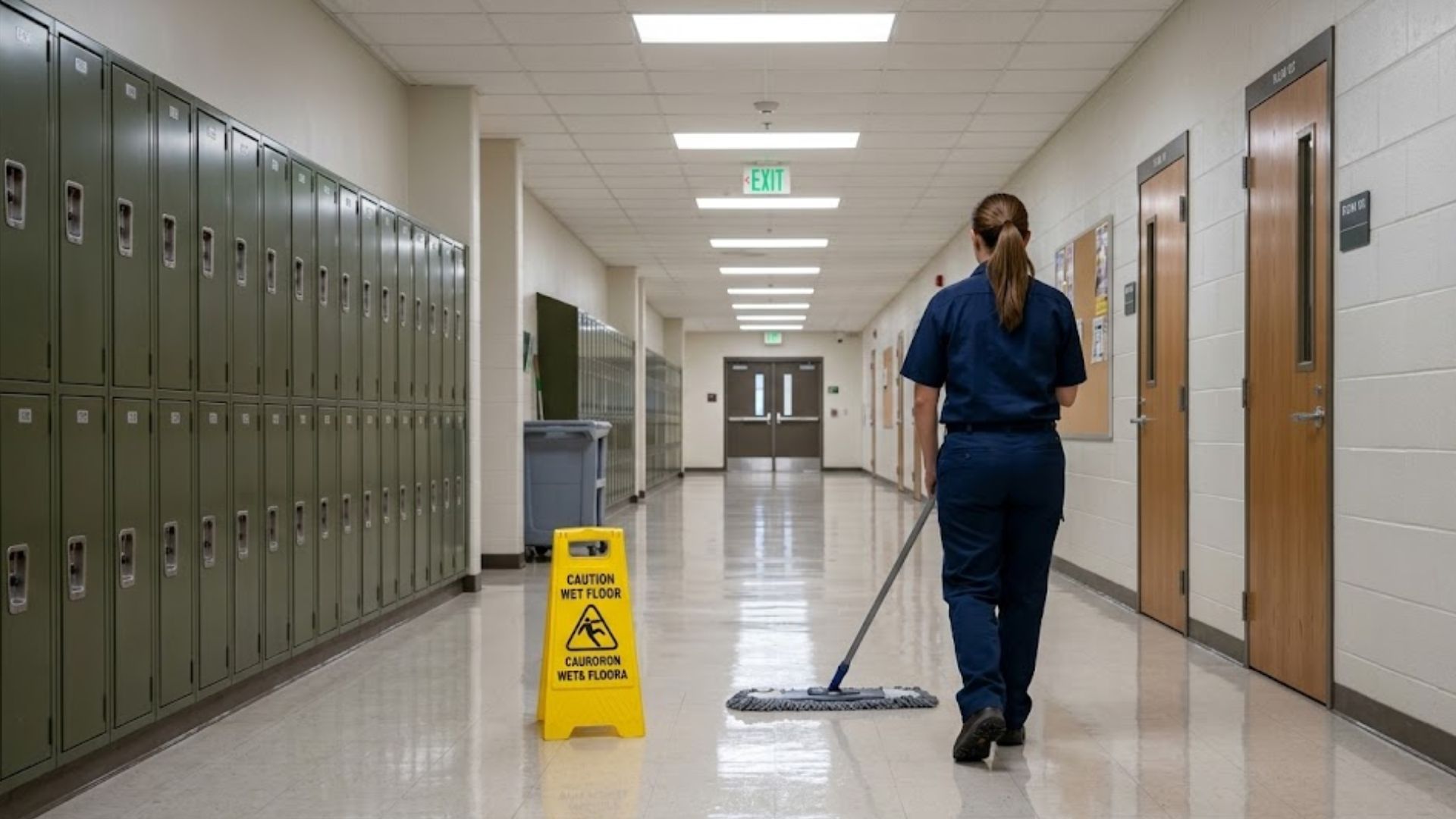
Related facility: Childcare centre and kindergarten cleaning has additional requirements beyond primary school scope — see the kindergarten cleaning page for the specific requirements for 0–5 year old environments.
Infection Control for Young Students
Primary school students are the age group with the highest prevalence of acute respiratory infection and gastroenteritis events in the Australian population — a function of developing immunity, close physical proximity in classrooms and shared equipment, and lower compliance with hand hygiene protocols compared to older students and adults. Melbourne primary schools typically see two distinct peaks of communicable illness — the autumn term peak of respiratory viruses in March to May, and the winter gastroenteritis peak in June to August — each of which increases the importance of consistent surface disinfection in the cleaning program.
Routine daily touchpoint disinfection
Door handles, light switches, shared equipment, computer keyboards and bathroom fixtures disinfected nightly using a GECA-certified disinfectant applied at the correct concentration and dwell time. This is included in every daily cleaning visit without requiring a separate instruction from the school. The dwell time — the period the disinfectant remains on the surface before wiping — is the key variable that separates effective disinfection from surface wiping.
Enhanced response — illness outbreak
When a confirmed gastroenteritis or respiratory illness outbreak is reported by the school, the enhanced infection control protocol expands the disinfection scope to all classroom flat surfaces and shared equipment in the affected cohort's areas, using a TGA-listed hospital-grade disinfectant with confirmed kill claims against the relevant pathogen — norovirus for gastroenteritis outbreaks, influenza A/B for respiratory events. Available on a 24 to 48 hour response timeline.
Term-start reset
At the start of each new term — particularly after summer and winter holiday breaks — a thorough touchpoint and surface disinfection of all classrooms before students return reduces the residual contamination load that accumulates in an unoccupied building over the holiday period (dust, mould spore settlement, biological buildup in bathroom fixtures). This can be included as part of a holiday deep clean or as a standalone pre-term sanitisation visit.
Primary School Cleaning Cost
Primary school cleaning cost is based on total floor area, number of rooms, cleaning frequency and the scope of periodic services included in the annual program. The indicative monthly rates below cover standard nightly cleaning with GECA-certified products across classrooms, bathrooms, corridors and common areas. Periodic services — carpet cleaning, floor strip and seal, holiday deep clean, window cleaning — are priced separately and confirmed at contract commencement.
| School size | Cleaning frequency | Indicative monthly range |
|---|---|---|
| Small primary (8–10 classrooms) | 5 nights per week | $450 – $900 / month |
| Medium primary (15–20 classrooms) | 5 nights per week | $800 – $1,800 / month |
| Large primary (25+ classrooms) | 5 nights per week | $1,500 – $3,000+ / month |
| Any size | 3 nights per week | 60–65% of 5-night rate |
| Holiday deep clean | Per visit, full campus | $800 – $2,000 |
| Term-start pre-clean | Per visit | $200 – $500 |
All prices exclude GST and are indicative only. Written quote confirmed after free site visit and room-by-room floor area assessment.
What affects primary school cleaning cost?
Free site visit · Written quote within 24 hours · No lock-in first term
Frequently Asked Questions
Three factors: product safety for children who have direct floor and surface contact throughout the day; specialist room knowledge for art rooms, music rooms and outdoor play areas that have no commercial equivalent; and regulatory compliance — Working With Children Checks, Department of Education Victoria contractor requirements and child safety policy under the Child Wellbeing and Safety Act 2005 (Vic). A general commercial cleaner has no training, product selection framework or compliance record relevant to any of these three requirements. Selecting a cleaning provider without primary school experience typically results in either regulatory compliance gaps or product choices that are inappropriate for the age group using the facility.
Every product used in Golden Star's primary school cleaning program carries GECA certification — independently verified as biodegradable, phosphate-free, low or zero VOC and free of persistent bioaccumulative toxins. Floor cleaners are formulated for low residue specifically to minimise chemical film transfer during floor-contact activities. Surface sanitisers are selected to have no irritant classification at the concentrations present on a cleaned and dried room surface. Safety data sheets for all products are available to the principal on request.
Routine infection control — daily touchpoint disinfection of door handles, light switches, shared equipment and bathroom fixtures using a GECA-certified disinfectant at the correct dwell time — is included in every daily cleaning visit. Enhanced infection control is deployed reactively when a confirmed illness outbreak is notified: scope expands to all classroom flat surfaces and shared equipment using a TGA-listed hospital-grade disinfectant with confirmed kill claims against the relevant pathogen, available on a 24 to 48 hour response timeline.
A small Melbourne primary school (8–10 classrooms) on a five-night weekly schedule starts from $450 to $900 per month. A medium-sized school (15–20 classrooms) starts from $800 to $1,800 per month. Larger campuses with 25 or more classrooms start from $1,500 per month. Periodic services — carpet cleaning, holiday deep clean, floor treatments — are included in the annual program at contract commencement and quoted separately. Visit the pricing page for a full rate breakdown, or request a written quote after the free site visit.
Related services & facilities
Speak to the team
Call 0484 042 336 Mon–Fri 7am–6pm. Free site visit with every quote.
Get a Free Quote